Tag: financial advisor

  • Stop Selling, Start Guiding: Why the Smartest Advisors Now Act More Like Therapists

    Money is emotional.
    We hate admitting it but it is.

    No one checks their portfolio and says, “Hmm, this fund’s alpha looks weak.”
    They say, “Why is everything falling again?”

    And that’s the real problem with how financial advice still works today.

    The Old Way: Sell First, Talk Later

    Most advisors still think their job is to recommend products the “right” mutual fund, the “best” ULIP, or that “exclusive” PMS.
    But here’s the truth: people rarely lose money because they picked the wrong product.
    They lose money because they reacted wrong.

    When markets fall, fear kicks in.
    When everyone else is making money, greed follows.

    That’s not a finance problem.
    That’s a psychological problem.

    And yet, the industry keeps rewarding the ones who sell more, not the ones who guide better.

    Investors Don’t Need a Distributor ,They Need a Decoding Partner

    The most successful advisors today aren’t the loudest sellers.
    They’re the ones who understand how people think, feel, and panic about money.

    They don’t throw ten product brochures at you.
    They ask, “What makes you anxious about your finances?”

    Because, whether we like it or not, money touches everything relationships, confidence, even sleep.
    So what’s the point of chasing returns if your client can’t sleep at night?

    The Numbers Back It Up

    Vanguard did a massive study to understand what actually drives investor outcomes and it wasn’t product selection.
    It was behaviour.
    Their Advisor’s Alpha research found that behavioural coaching alone adds up to 1.5%–2% in extra annual returns just by keeping clients calm, consistent, and invested when markets get messy.

    That’s nearly the same as the difference between an “average” and a “top-performing” fund.

    Go one step further, and the full advisor framework (behavioural coaching, rebalancing, cost management) adds around 3% in net returns per year pure alpha created by good guidance, not product picking.

    So yeah, empathy literally pays.

    Advisors as Financial Therapists

    Think about what a great therapist does:
    They listen. They help you understand your triggers. They stop you from making choices that hurt you long term.

    Now swap the word emotion with investment decision and that’s exactly what a great financial advisor should do.

    Instead of saying, “Let’s invest in this because it’s performing well,”
    they say, “Let’s talk about why you panic every time markets fall.”

    That’s not being soft.
    That’s being smart.

    Because when you manage behaviour, you automatically manage money better.

    Empathy Has an ROI

    Here’s what’s wild empathy isn’t just good for clients. It’s great for business.

    Advisors who focus on guiding rather than selling keep clients almost 50% longer, according to industry research.
    And retention pays increasing client retention by just 5% can boost profits by 25% to 95%.
    That’s because loyal clients invest more, stay longer, and refer more.

    It’s not about flashy returns it’s about emotional trust.

    And once you’ve built that, you’re no longer “one of many advisors.”
    You become the person they call before making any major financial decision.

    So What Needs to Change?

    If you’re an advisor, start here:

    • Listen more than you speak. People want to be heard before being advised.
    • Ask better questions. Not Where do you want to invest? But Why do you want to invest?
    • Redefine success. The best metric isn’t AUM growth it’s how calmly your clients sleep at night.

    And for investors?
    Stop looking for someone who promises the highest returns.
    Find someone who helps you stay sane when the markets don’t.

    The Future of Financial Advice Is Deeply Human

    AI and robo-advisors can already pick funds and rebalance portfolios faster than any human.
    But what they’ll never replace is trust.

    In fact, when Vanguard compared clients of robo-advisors vs. human advisors, people with human guidance believed their advisor added nearly 33% of their returns — compared to just 12% for robo platforms.

    That’s not about math. That’s about connection.

    AI can’t hear fear in your voice or calm you down after a bad quarter.
    That’s the human moat.

    Tomorrow’s top advisors won’t be product experts they’ll be behavioural translators.
    People who help you understand your relationship with money.
    People who stop you from making panic-driven mistakes that cost far more than any fee ever could.

    Final Thought

    Your advisor shouldn’t just be someone who sells you investments.
    They should be the person who helps you stay rational when your emotions want to take over.

    Because great advice isn’t about beating the market.
    It’s about understanding the person facing it.

     

  • 10-Year Investment Growth Analysis: Gold, Silver, and Nifty 50 (2014–2024)

    If you had invested  in Gold, Silver, or the Nifty 50 a decade ago, where would your money stand today? This question isn’t just academic—it’s one that thousands of Indian investors have lived through in real-time. From demonetization to COVID-19, and from global inflation to tech booms, the last ten years have been transformative. As market sentiment and investor awareness grew, so did the popularity of different asset classes. But the real question remains: Which one grew your money the most—and why?

    This blog dives deep into three popular investment avenues in India—Gold, Silver, and the Nifty 50—offering a simple yet thorough analysis of how each performed between 2014 and 2024. We’ll look at historical data, returns, tax impacts, risk factors, and even what recent surveys say about investor preferences. This data-driven breakdown, in plain English, is designed to help you make more informed investment decisions in the future.

    Asset Overview (In Simple Terms)

    Gold

    Gold has always been considered safe during uncertain times. In India, it holds not just financial value but cultural significance too. People often buy gold during weddings and festivals, but it’s also seen as a hedge against inflation.

    Silver

    Silver is more volatile than gold. It’s not just used for jewelry but also in industries like electronics and solar power. This dual nature makes it unpredictable, but it has huge potential when industrial demand surges.

    Nifty 50

    The Nifty 50 is a stock market index that includes 50 of the top companies in India. It’s like a snapshot of how well the Indian economy is doing. If the Nifty 50 goes up, it usually means companies are earning more, which benefits investors.

    Historical Price Performance (2014 to 2024)

    Here’s a look at how much these assets have grown in Indian Rupees over the past decade:

    Gold

    • Price in 2014: ₹26,703 per 10 grams
    • Price in 2024: ₹78,245 per 10 grams
    • Absolute Return: 193%
    • Compound Annual Growth Rate (CAGR): ~11.3%

    Silver

    • Price in 2014: ₹43,070 per kilogram
    • Price in 2024: ₹95,700 per kilogram
    • Absolute Return: 122%
    • CAGR: ~8.3%

    Nifty 50

    • Index in 2014: 6,700 points
    • Index in 2024: 22,500 points
    • Absolute Return: 236%
    • CAGR: ~13.0%

    What ₹1,00,000 Became in 10 Years

    Asset 2024 Value Total Gain
    Gold ₹2,93,000 ₹1,93,000
    Silver ₹2,22,000 ₹1,22,000
    Nifty 50 ₹3,36,000 ₹2,36,000

    Takeaway: If you had put ₹1,00,000 in Nifty 50 stocks, it would have become ₹3,36,000 in 10 years. That’s ₹1,43,000 more than gold and over ₹1 lakh more than silver.

    Risk and Volatility (How Safe Are These Investments?)

    Asset Average Volatility Biggest Loss Year Risk Level
    Gold ~12% -8% in 2015 Low to Moderate
    Silver ~21% -19% in 2015 High
    Nifty 50 ~15% -24% in 2020 Moderate

    Explanation: Silver is the most unpredictable. Nifty 50 had a sharp dip during COVID in 2020 but bounced back quickly. Gold remained the most stable.

    Why Prices Moved (The Bigger Picture)

    Gold

    • The rupee weakened from ₹60 to ₹83 per US dollar—this boosted gold prices.
    • Global inflation and events like the pandemic made people rush to gold.

    Silver

    • The demand for solar panels, electric vehicles, and tech gadgets increased.
    • Production got affected due to lockdowns in mining countries.

    Nifty 50

    • India’s economy grew steadily with an average GDP growth of 6.5–8%.
    • Government reforms (like GST) and high earnings in IT and banking sectors lifted the market.
    • Global investors poured money into Indian stocks—an average of ₹1.2 lakh crore per year came in.

    Taxes: What You Actually Keep

    Asset How Long To Be Tax-Free? Long-Term Capital Gains Tax
    Gold More than 3 years 20% with indexation benefit
    Silver More than 3 years 20% with indexation benefit
    Nifty 50 More than 1 year 10% (only if gains exceed ₹1 lakh/year)

    Tip: Nifty 50 investments become tax-efficient faster and have lower tax rates than gold and silver.

    How Easy Are These to Buy or Sell?

    • Gold: Easily available in shops, banks, and online. You can also invest via Digital Gold, Gold ETFs, or Sovereign Gold Bonds (SGBs).
    • Silver: Mostly physical, but silver ETFs are catching on.
    • Nifty 50: Super easy—just open a Demat account and invest via mutual funds, ETFs, or directly in shares.

    Survey Says…

    According to a 2023 Groww investor survey:

    • 67% of Indian investors chose equity-based mutual funds or stocks for long-term goals.
    • 22% kept 10–15% of their money in gold.
    • 6% considered silver a viable long-term asset.
    • 5% used a mix of all three to diversify and manage risk.

    Real-Life Example

    Let’s say two friends, Arjun and Priya, each had ₹1,00,000 in 2014.

    • A invested in Nifty 50 – now he has ₹3,36,000.
    • B bought gold – she has ₹2,93,000.

    Even though both saw growth, Arjun’s investment gave a better return with dividends and tax benefits. But Priya’s gold investment gave her peace of mind during rough patches like COVID and inflation.

    Final Takeaways

    • Best Wealth Builder: Nifty 50, with the highest return (236%) and solid CAGR (13%).
    • Safe & Steady: Gold, with good stability and decent CAGR (11.3%).
    • High Risk, Moderate Return: Silver gave decent returns but was unpredictable.

    Conclusion

    If your goal is to build long-term wealth, Nifty 50-based investments are clearly in the lead. However, putting all your money in one asset class isn’t wise. Instead, a smart investor balances risk and reward. Here’s a possible mix:

    • 60% in Equity (like Nifty 50) for high growth
    • 30% in Gold for safety and stability
    • 10% in Silver for future tech-related gains

    Investing is like cricket—you need a good mix of batsmen, bowlers, and all-rounders. Similarly, your portfolio needs growth, safety, and opportunity.

    Note: The above analysis is based on historical data and should not be construed as investment advice. Investors should conduct their own research or consult financial advisors before making investment decisions.

  • 3 must-have financial experts in life

    3 must-have financial experts in life

    Introduction

    Navigating the world of finance and accounting can feel like a confusing journey. Yet, there’s a shortcut to success: having the right experts by your side. Think of it as turbocharging your progress toward your financial goals and securing your financial well-being.

    In this blog, we’re here to shed light on the roles of three essential professionals who should be part of your financial squad: the Financial Advisor, the Accountant, and the Chartered Accountant (CA).

    Each of these financial experts has a unique role to play in helping you make sense of the complex terrain of money management and personal finance. Join us as we delve deeper into why you need them and how they can be your guiding stars on your financial voyage.

    Why do you need a Financial Advisor?

    A Financial Advisor is like a navigator for your financial voyage. Their primary role is to help you set clear financial goals and create a meticulously tailored plan to achieve them. Here’s why you need a Financial Advisor:

    How can they help you?

    Goal Setting

    A Financial Advisor assists you in identifying and crystallizing your short-term and long-term financial objectives, whether it’s buying a home, saving for retirement, or funding your child’s education. They help you prioritize and establish a road map to reach these milestones.

    Investment Guidance

    Investing can be overwhelming due to various options and risks. Financial advisors guide you on where to put your money, considering your risk tolerance and financial goals.

    Risk Management

    Financial Advisors evaluate and help you deal with financial uncertainties by figuring out how comfortable you are with taking risks. They develop plans to safeguard your money from unexpected events, so your finances stay safe.

    Retirement Planning

    They make custom retirement plans that match your idea of a comfortable and secure retirement. They consider your current money situation and future needs to create a complete strategy.

    Tax Efficiency

    Financial Advisors assist you in finding ways to pay less in taxes legally and efficiently, all while making sure you follow the tax rules.

    Why do you need an Accountant?

    An accountant serves as a meticulous record-keeper for your financial matters. They’re experts in organizing your financial paperwork, making sure you follow tax rules, and keeping your financial information accurate. Here’s why you should have one:

    How can they help you?

    Financial Record Keeping

    Accountants maintain detailed financial records, tracking income, expenses, and transactions. This meticulous record-keeping is crucial for accurate financial reporting and ensuring transparency.

    Tax Compliance

    Tax regulations are constantly evolving, making it challenging for individuals and businesses to stay up-to-date. Accountants prepare and file your tax returns, ensuring compliance with ever-changing tax laws and helping you maximize deductions and credits.

    Financial Analysis

    Beyond record-keeping, Accountants provide insights into your financial performance by analyzing your financial statements. They identify trends, opportunities, and areas that may require adjustments, empowering you to make informed decisions.

    Budgeting and Forecasting

    Accountants help you create and manage budgets, ensuring your financial resources are allocated optimally. They also assist with financial forecasting, providing a roadmap for future financial decisions.

    Business Support

    For people who own businesses, accountants are really important. They help plan finances, keep all the money records, and make sure the business can stay financially healthy. They can also give advice on how to spend less, make more money, and follow the rules.

    Why do you need a Chartered Accountant (CA)?

    Chartered Accountants are like a Marine Surveyor on your financial voyage, with high expertise and technical skills to guide you.

    Often referred to as CAs, Chartered Accountants are highly skilled experts in accounting and finance. They bring a wealth of knowledge to the table, specializing in auditing, and financial analysis, and offering strategic financial advice. Here’s how a CA can make a difference for you:

    How can they help you?

    Auditing

    CAs meticulously examine financial statements to ensure they’re accurate, transparent and comply with all the rules. These audits are vital for gaining the trust of investors and regulators.

    Strategic Financial Advice

    CAs provide strategic financial guidance to individuals and businesses, helping them make informed decisions that align with their goals. Their deep understanding of financial markets and regulations is invaluable in complex decision-making.

    Tax Planning

    CAs offer valuable advice to individuals and businesses, helping them make smart financial decisions that match their goals. Their deep knowledge of financial markets and rules is incredibly helpful when facing complex decisions during tax planning.

    Risk Assessment

    CAs are great at figuring out financial risks and suggesting ways to lower them. This protects your financial stability, and their strategies are like a safety net for your wealth.

    Complex Financial Transactions

    CAs can tackle tricky financial transactions, like mergers, international taxes, and investment portfolios. They make sure these transactions happen smoothly, efficiently, and in a way that’s best for your money.

    In Conclusion

    In the world of your personal and business money matters, having a group of experts isn’t just helpful, it’s something you really need.

    • Financial Advisors help you plan your financial path.
    • Accountants keep your money records in tip-top shape.
    • Chartered Accountants tackle the tough financial stuff.

    Working with these pros isn’t just smart; it’s necessary. They help you reach your money goals, lower risks, and secure your financial future.

    Don’t wait—get these essential experts on your side. They’re your best buddies on your money journey.

  • How To Escape From Motive Driven Selling

    How To Escape From Motive Driven Selling

    A busy yet gloomy Monday morning filled with chaos to get to work in time right when the phone rings and an unknown number flashes on the phone screen. From experience, you know you shouldn’t pick upt, yet, you do with the hope of it being relevant and useful. The first few words that you hear might sound like this, “I am calling to inform you that you have a pre-approved loan…” or “you have been approved for a free credit card…” The intent of the call might be different every day but the general tone will give you a picture of the person on the other side.

    Why Sales people want you to buy their product?

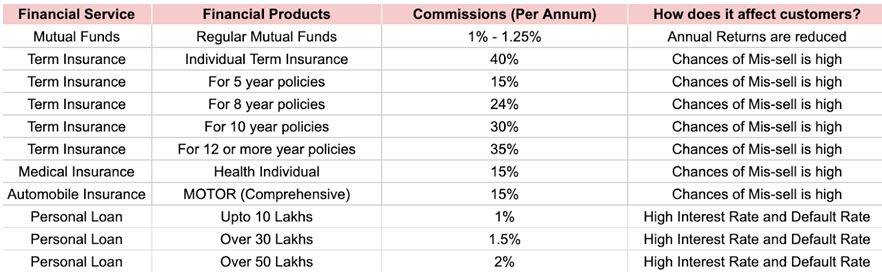
    In the Banking, Financial Services, and Insurance sector, “cold calling” is used as a sales method to sell loans, credit cards, or insurance products. A process that is very important in the sales cycle of an Insurance Agent, Loan Agent, or Credit Card Agent. This call that you happen to answer  is their opportunity to convince you to try their product. If you contemplate buying one of these, then, that gets them excited. You might wonder why? Some of you might already know the answer to this. The answer is that you helped them get a hefty commission by just agreeing to take the product that you might not truly need.

    What is a good financial product sale?

    There is nothing wrong with getting a reward for a good sale. A good sale is nothing but understanding your needs and goals before suggesting the product to you. The trait of a good sale would be to give you options: these are the best credit cards out there for you or this insurance covers all your medical needs for the next 10 years. If they listen to you and understand, they can suggest better financial products.

    What is going wrong with their sales pitch?

    Unfortunately, their scripts find themselves bunched up differently. The sales team’s script needs to start with understanding your situation and then, recommend the product that fits well in your financial plan.  Instead, they are in a rat race to mis-sell term insurance or health insurance, or even a loan, just for the sake of commission.

    Do we truly have an option to find the right financial product?

    There is a growing trend for people to look for a financial consultant to guide them with the right financial advice. This is to stay filtered from the ones who are behind those calls with an elaborate script to persuade and sell the highest commissioned product to you.. This mis-selling behavior in the banking sector or BFSI sector has been reported several times in the past. The study conducted by The Economic Times clearly talks about how dealing with them is the only option. This is indeed reality as your personal data is being pushed even into the smallest banks, where you have never had any transactional relationship. These make you highly exposed and vulnerable and are cornered by your own trusted banks/NBFCs.

    Going Above and Beyond for a smarter Financial Decision

    A good sale always leads to more referrals and definitely helps the financial institutions to supercharge their growth. But now, the opposite is happening where customers are warning their friends & family about the annoying, daily sales calls. Until the sales agent realizes the secret power of value selling, you as a consumer have to be smart with your filtering process to get the best financial products.

    These are a few tips that can help us decide what product to get.

    • Research on options that will match your needs – Be it Insurance, Loans, or Credit Cards, today we can quickly access the information on the internet and get extensive research done on key metrics needed to buy a suitable financial product.
    • Find the one that is affordable – Always understand our appetite and find the product that we can afford without hindering our lifestyles. It wouldn’t be wise to compromise on other life-altering decisions based on a bad financial decision.
    • Learn about the fine prints – It is crucial to read between the lines and understand the hidden and invisible conditions associated with the chosen financial product. If we don’t know what to ask, we can start learning from communities that promote financial literacy. There are plenty of educational resources available to help us cultivate this best practice.
    • Seek Assistance from Financial Experts – Always have some trusted individuals who are preferably experts in this field. This could help us benefit and sometimes even exploit (in a legal way of course!) our financial system and achieve your goals. An expert who can provide guidance in everything ‘money-related’.

    In time, such customers will evolve to take right decisions on their own with experience and/or with external guidance from advisors. When that time comes, most of these insurance brokers, loan agents, and credit card resellers would find it challenging to trick customers into purchasing a product unsuitable for their financial needs. Until then we have to protect ourselves with knowledge that will help us distinguish the good from the bad. A good place to start would be on vittae.money, where we can learn from your own community The content shared will help us upskill and stay informed on the products and other regulatory methods proposed by the Reserve Bank of India.