Author: Smriti Madhavan

  • What are GOLD ETFs? When should you buy them?

    What are GOLD ETFs? When should you buy them?

    For centuries gold has proven to be a safe investment bet. Indians, when compared to people in the rest of the world, have felt great comfort when investing in this yellow metal. Often, this investment is in the form of jewelry and not other digital forms like Gold ETFs or Bonds. Although, investment in physical gold has created other challenges for us. As India does not produce gold in significant quantities, we have begun to rely on imports.

    People began to accumulate Gold for safety purposes as their Long-term investment strategy. Some professionals today say that Gold is a great tool to hedge against inflation. Large scale gold imports, especially for investment created a higher Trade Deficit (this happens when imports far exceed exports). When this happens the rupee comes under pressure and tends to weaken. This sets off many more problems for the Indian economy.

    To avoid this situation and push people to look beyond investing in just Physical Gold, the Government of India came out with Gold Exchange Traded Funds (ETFs) apart from Sovereign Gold Bonds (SGB).

    Now….What is a Gold ETF?

    A Gold ETF is an exchange-traded fund that aims to track the domestic price of physical gold. In other words, Gold ETFs are units representing physical gold either on paper or in dematerialised forms. Typically, one Gold ETF is equal to 1 gram of gold. Meaning, 1 unit of Gold ETF is backed by an equivalent quantity of physical gold. Gold ETFs give you a combined benefit of investing in Stocks as well as Gold.

    They are listed and traded on the National Stock Exchange of India (NSE) and Bombay Stock Exchange Ltd. (BSE). And just like the stock of any company that can be bought & sold continuously at market prices, Gold ETFs can be treated the same way.

    However, when you actually sell your Gold ETF, you don’t get physical gold, but receive the cash equivalent of the market price.

    How are Gold ETFs Beneficial to you?

    • Transparency – The biggest benefit is the transparency in pricing as it is directly linked to the price of gold. 
    • Cost – ETFs incur far lower expenses compared to physical gold where one ends up paying wastage charges, making charges, safe storage cost etc. 
    • Safety – Unlike physical gold the investor need not worry about the investment’s safety. ETFs not only fetch the same return as physical gold but are also a lot safer than its physical form as there is no fear of theft or depreciation.
    • Loan – Gold ETFs can be placed as a collateral to secure loan from any financial institution.

    Where can you purchase Gold ETFs?

    Gold ETFs can be purchased through a stock broker like Zerodha, Sharekhan and other investment apps. You will have to pay a small brokerage or fund management charges while buying or selling Gold ETFs. As  mentioned earlier the overall cost is much lower than what an investor incurs in buying physical gold and there is NO better time to invest in Gold than today.

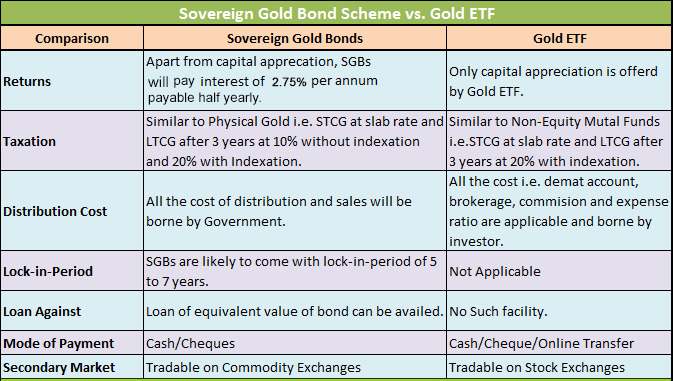
    Gold ETFs Vs. SGB

    Many of you might have a pondering question on how Gold ETFs are different from SGBs. Well here’s our take of the same. 

    gold etfs

    The advantage that ETFs have over SGB is that they are more liquid. They can be sold at any given time like stocks. An investor need not hold onto their investment for a fixed period. Although ETFs are taxable.

    If you prioritize your investments based on safety and liquidity, then Gold ETFs are your safe haven.

  • Is It The Right Time To Start Gold Investment?

    Is It The Right Time To Start Gold Investment?

    Gold Investment is considered to be an all weather investment. More than an investment, Gold is treated as an insurance for all the other investments. It is a hedge against inflation.

    During an economic downturn while asset classes such as stocks, mutual funds and real estate may tumble, Gold would still sustain and outperform them. This is the reason why portfolio managers always insist on having a fair share of your investments in gold.

    Gold_Investment

    Today, we see the stock markets across the globe have become more volatile due to geo-political tensions with Russia- Ukraine conflict and stringent covid-lockdown in China. Fears of economic recession and increase in Fed rates has created the perfect situation for gold to skyrocket again.

    Is this the right time to invest in gold? Ideally, yes. Stock markets are down, cryptos have crashed and real estate is yet to recover. Gold at its present value looks attractive. Experts believe people will shift their focus to gold if stock don’t recover soon.

    Gold’s performance in the last 20 years

    The annualized return from march 2000 to march 2020, Nasdaq 100 had a return of 2.5 percent, S&P 500 gave a return of 4 percent whereas gold gave a return of almost 9 percent. 

    In 2020, gold delivered an annual average return of 24.6 percent. Over the last 40 years gold provided an average annual return of 9.6 percent and negative returns only at 8 instances. 

    Stock Vs Gold performance during the economic crisis

    During the 2008 global financial crisis, while the stock market fell as much as 60 percent, gold remained unaffected and in fact it grew by 6 percent. The same would be visible with multiple other crisis situations like the East-Asian crisis. 

    This clearly indicates that gold is a safe bet when it comes to economic downturns. 

    How to start gold investment? 

    There are multiple options to invest in Gold like buying physical gold, Gold ETFs or Sovereign Gold Bonds (SGBs). 

    • Physical Gold can be purchased in the form of coins or bars. Buying jewelry isn’t an investment.
    • A gold ETF is a type of ETF that can be purchased or sold on a stock exchange like any regular stock. The option eliminates storage costs & security risks of holding physical gold but comes with an expense ratio and Capital gains tax.
    • SGBs are substitutes for holding physical gold. SGBs are less risky as they are guaranteed by the government. But there is more to add, these bonds offer 2.5% interest and NIL Capital Gains tax if they are redeemed by completing the term(8years).

    Options like SGBs and Gold ETFs are termed as Paper-Gold which obviates the need to buy physical gold and store them while assuring the same return.

    If the World Bank & IMF are to be believed, the global economy is slowing down significantly due to covid and geo-political tensions. Global trade has shrunk. And stocks, mutual funds, cryptos, real estate will see a major correction. Smart investors looking for better investment options would definitely find gold as their best bet. So it’s time for you to become smart by starting to invest in gold.

  • Alert! Buy Now Pay Later takes over GEN Z 

    Alert! Buy Now Pay Later takes over GEN Z 

     In the early days, people could buy what they wanted only if they had the money for it. Then, consumerism was restricted to just the wealthy. As the world evolved, efforts were made to widen the consumer base by including those who may not have immediate cash but do have the ability or income to pay for the goods and services over time. This concept gave way to consumer loans (car loans, home loans, and an equated monthly installment scheme for purchasing a mobile phone or a refrigerator or a washing machine and so on), hire-purchase, and even credit cards. This gave a huge fillip to consumerism. 

    Now the world is moving a step further. Loans are being offered to people without a credit history and a near zero interest rate. Gen Z is taking to it like fish to the water. While this is expected to create a huge demand for goods and services and help revive the global economy rapidly, many worry that it is the latest financial pied-piper – one that will lead youngsters into financial ruin. Welcome to the world of ‘Buy Now Pay Later’ financing. 
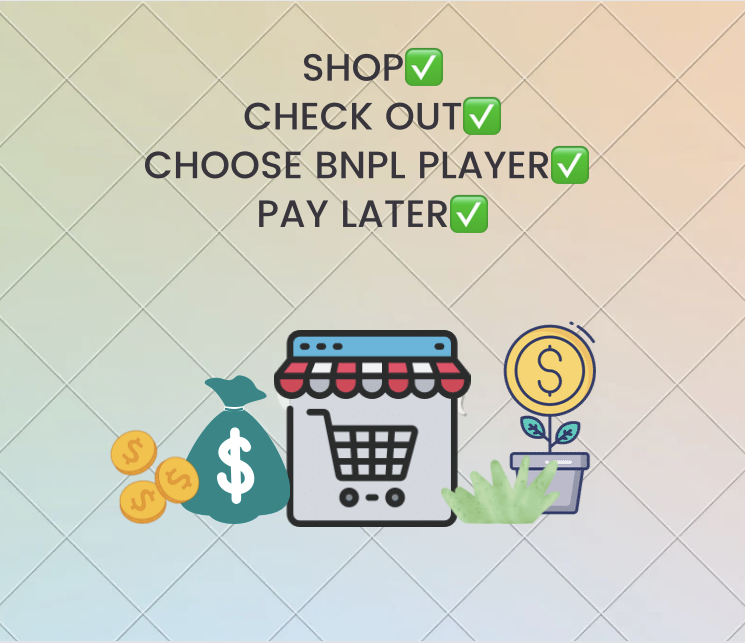
    How BNPL works? In simple words for you: 

    When a customer goes to buy a product and if the retailer offers a BNPL option, he/she can opt for it. The BNPL financier will then pay the retailer and offer the customer a repayment schedule based on his/her needs. If the customer repays on time, she will incur no interest charges. But if they default, interest or penalties will be charged and BNPL companies make money with it.

    Benefits of BNPL 

    BNPL offers access to credit for people outside the formal banking system. According to recent data, fifty percent of all BNPL customers are first-time borrowers (largely GenZ). Low-interest rates, flexible repayment schedules, and the need for credit history have made it an interesting and attractive instrument

    Disadvantages of pay later apps 

    Not considering a person’s credit history and his other liabilities makes BNPL loans risky. While the ticket size of a BNPL is low a customer can take multiple loans from various financiers. This will increase liability significantly and affect his ability to repay.

    This could cause a sharp jump in non-performing assets (NPAs). There are estimates which show that defaults in BNPL loans are in double digits. Apart from the risk to the financial system, BNPL also risks corrupting the culture. Indians, unlike say Americans, are careful when it comes to borrowing to meet their needs.

     An easy and low-cost borrowing option such as BNPL will force Indians to borrow more than they would have done otherwise leaving them massively leveraged and in a debt trap. This is particularly true with GenZ which is a lot more aspirational. Even without BNPL, India’s household debt to GDP has grown from thirty percent in 2017-18 to 37 percent in 2019-20. In the case of the US, this figure is 77 percent. 

    Other disadvantages of BNPL services includes impact on your credit scores. The payments defaults and missed payments are reported to the credit bureaus. On top of that, it is difficult to get a refund if the product was defective or did not arrive.

    Save now, spend later

    Saving enough money to invest is itself a challenge. They do not believe in the adage `Money saved is money earned’. Gen Z is yet to understand that by saving a percentage of their salary, they can build for the future. But most youngsters spend as if there is no tomorrow. They even borrow and spend or use `buy now to pay later’ financial products. Inculcating savings among today’s youngsters is critical.

    For some who manage to save, they still end up in financial stress as they make wrong investments due to lack of knowledge. For instance, somebody who is young and is yet to build a significant savings gets lured by the stock market without realizing the risks involved. That person invariably ends up losing his investment. There are times when people end up making wrong investments without understanding their risk appetite. This results in their investments getting locked up for a long time subjecting them to needless pressure on the money front.

    BNPL is catching up- latest stats!

    It is the hottest thing happening in the fintech space today. The proof is the fact that billions of dollars are being injected into the startups operating in this sector. According to GlobalData, the BNPL industry is expected to reach a size of 166 billion dollars globally by 2023. In India, the industry is set to grow tenfold in the next four years from 3.5 billion dollars to 50 billion dollars. In Fact, in the last two years, BNPL has seen a 45x growth. According to media reports, only 70 million people have access to credit today which means 93 percent of India is outside the formal banking channel. The fact that it is easy to apply and can be done digitally makes BNPL the most sought after instrument when it comes to financing, especially among the youngsters.

    BNPL Vs Credit Card (We heard you!) 

    The biggest advantage of BNPL is that it gives you immediate access to credit without any questions being asked. One does not need to have a proper credit history (something GenZ typically lacks) to avail of BNPL facilities. In the case of a credit card, one needs to first apply, get the necessary approval before the card is issued. In the case of BNPL, there is no annual or joining fee. An important differentiator of BNPL is that the customer pays zero or very little interest (as long as the amount is repaid on time) unlike in the case of credit cards where the interest rates are between 2 to 4 percent per month. 

    In BNPL transactions, ticket sizes are typically low (maximum of Rs 1 lakh) unlike credit cards but they offer significant flexibility when it comes to repayment. 

    Major BNPL Players in India

    Some of the major fintech companies that offer BNPL options are

    1.  Simple
    2. Zest Money
    3. LazyPay
    4. Flexpay
    5. Payton postpaid
    6. Amazon pay later
    7. ePayLater
    8. flipkart pay later

    Even traditional banks are entering this business. For instance, Axis Bank bought Freecharge from e-commerce firm snapdeal. This includes HDFC bank’s FlexiPay and ICICI bank’s ICICI PayLater. 

    BNPL is also spreading to other sectors

    BNPL as a concept is not only growing rapidly in financing but is also spreading to other sectors. Travel companies have started “Fly Now PayLater” schemes to attract travelers. Insurance companies have also started implementing this instrument to get cash-starved customers to pay their premiums. 

    While BNPL as a financial option has its advantages but it needs to be regulated effectively. Customers (mostly Gen Z and first-time borrowers) have to be educated properly on amazon pay later and such similar apps, to ensure that this concept of payment does not fail and cause a crisis to the banking system. It is also important for the customers to know the problems that come with these Shop now Pay later apps that include the delinquency rate as well. Having said that, if you are disorganized with your finances, BNPL services are not for you!